
If your upstairs runs ten degrees hotter than the main floor and the AC never seems to catch up, the problem is almost always your attic, not your air conditioner. On a sunny day the attic above your bedrooms turns into an oven, and that heat radiates and leaks down into the rooms below while your AC runs and runs trying to keep up. The fix is air sealing and insulation: stop the leaks and put a real barrier between that superheated attic and your living space. Closed-cell spray foam does both jobs in one step, which is why it is our first stop on a hot upstairs. It will not turn your second floor into a walk-in cooler, but it takes a real load off the AC and evens the house out. Here is what is going on, and how to fix it for good.
Key takeaways
- A hot upstairs is almost always an attic and air-sealing problem, not a weak air conditioner.
- Summer heat pours in through the attic, knee walls, recessed lights, and leaky ducts, and the AC fights it all day.
- Air sealing plus insulation is the real fix, and closed-cell spray foam does both in one step.
- The EPA estimates air sealing and adding insulation saves homeowners about 15% on heating and cooling on average.
- It takes a load off the AC and evens out the house. It does not replace your air conditioner, and we will tell you straight what it can and cannot do.
Why is the upstairs so much hotter?
Two things stack up against your second floor. Heat rises, and your roof bakes in the sun all day. The attic over those upstairs rooms gets brutally hot, far hotter than the air outside, and all that heat wants to move down into the cooler space below it. At the same time, warm air leaks through every gap between the attic and the rooms. So the upstairs sits right under the hottest part of the house and takes the worst of it, while your AC is down on the main floor pushing cool air uphill against a ceiling that is radiating heat back at you all afternoon and into the night.
Is it my air conditioner or my insulation?
Most people blame the AC first and start pricing a bigger unit. Sometimes that is part of it. More often the air conditioner is fine and the house is leaking. Putting a bigger AC on a leaky, under-insulated house is an expensive band-aid. It short-cycles, it costs more to run, and the upstairs is still warm at bedtime.
The cheaper fix that actually lasts is usually to seal the house up and insulate it right, so the AC you already have can keep up. The EPA estimates homeowners save about 15% on heating and cooling costs, on average, by air sealing and adding insulation in attics and crawl spaces (ENERGY STAR). That is the honest framing too: it reduces the load, it does not make summer heat disappear. But taking that load off is what finally lets the upstairs hold a temperature.
What actually fixes a hot upstairs?
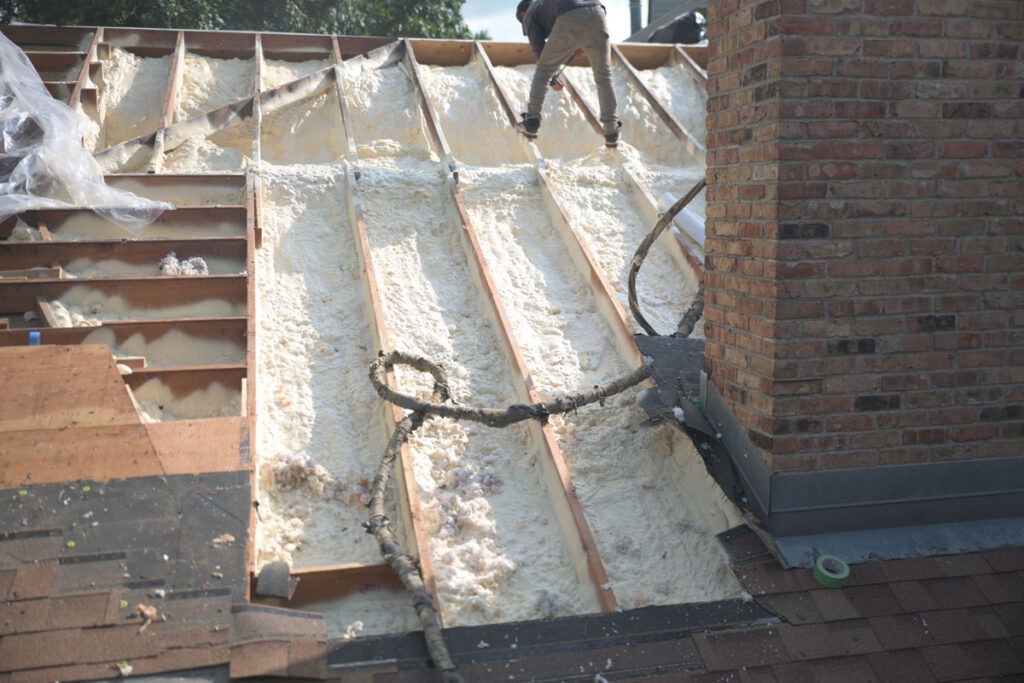
Two things, and they work together: air sealing and insulation. Air sealing stops the leaks that let hot air pour in and your cool air sneak out. Insulation puts a thermal barrier between that hot attic and your rooms. Do one and skip the other and you leave most of the benefit on the table, which is the trap with just adding a layer of batts over leaky gaps.
Closed-cell spray foam does both in one pass. It seals the cracks and it insulates with a high R-value per inch, and it will not sag, settle, or slump out of place a few years down the road the way loose or poorly installed insulation can. That is why, when somebody calls us about an upstairs they cannot cool, the first thing we look at is whether we can seal and insulate the envelope rather than just pile more material on top of the problem.
Where is the heat getting in?
This is the part you cannot see from the couch, and it is where the work really is. The usual suspects on a hot second floor: the attic floor or the underside of the roof deck, the knee walls (those short walls in a finished upstairs room with open attic space hiding right behind them, a classic weak spot), recessed can lights that leak air like little chimneys, the gaps around plumbing stacks and wiring, and ductwork running through a roasting attic and losing cool air the whole way.
We have opened up plenty of second floors where the insulation looked fine from the attic hatch but the knee walls and can lights were wide open to the attic air. From the bedroom you would never know. Seal those off and insulate them right, and the room that used to be ten degrees hot finally holds the temperature the rest of the house is at. That is the difference between insulation that looks done and an envelope that actually is.
Is summer a good time to insulate?
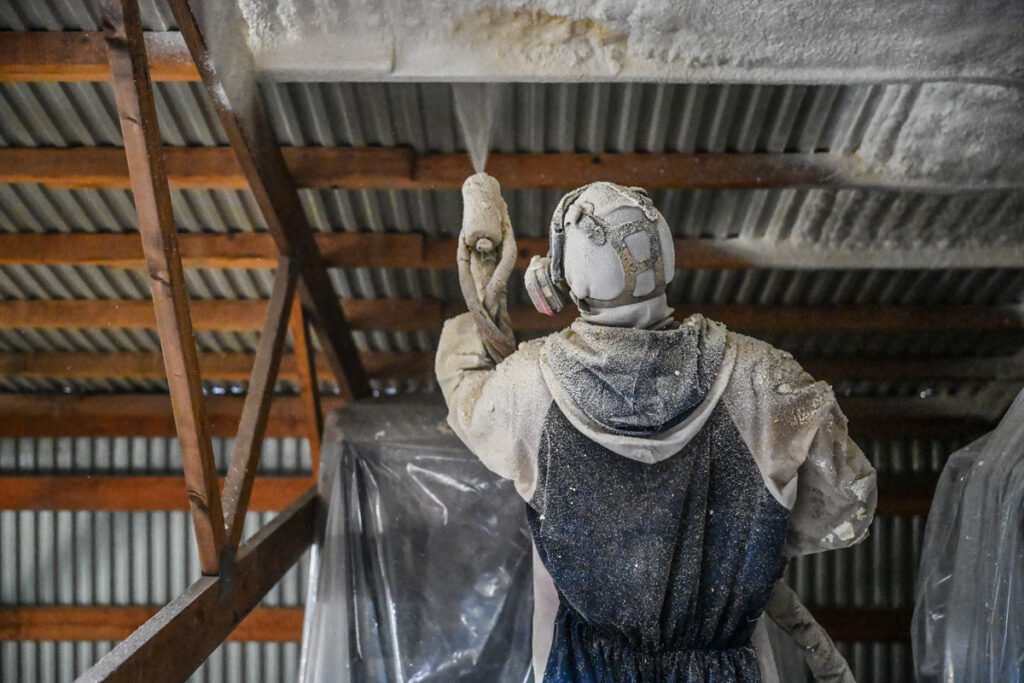
It is. We work year-round, and the upside of doing it now is simple: you feel the difference this summer instead of waiting for next. The one honest catch is that attics are punishing to work in on a 90 degree day, so our guys start early and work smart. If it is a new build or a remodel, the time to foam is before the drywall goes up, while everything is open. Either way, the move is to get on the schedule rather than sweat through another July.
This is bread-and-butter work for us. Midwest Spray Foam air-seals and insulates the whole envelope with closed-cell foam, on homes, crawl spaces, pole barns and shops, and commercial buildings across northwest Iowa. You can run a free instant quote on our site to get a rough starting number, and then we come measure for free and give you a firm one. That estimator is a ballpark for a basic, accessible layout, not a final price, so the on-site look is where the real number comes from. And if foam is not the right call for your situation, we will tell you that too. Ready to stop fighting your upstairs? Schedule a call and we will take a look.
FAQ
Why is my upstairs hotter than my downstairs in summer?
Heat rises, and the attic above your second floor gets far hotter than the outside air, so that heat radiates and leaks down into the rooms below. Your AC is usually on the main floor, working against a hot ceiling overhead. Add in air leaks at the attic, knee walls, and can lights, and the upstairs ends up several degrees warmer.
Will spray foam actually fix a hot upstairs?
Spray foam addresses the real cause, which is the leaks and the missing thermal barrier between the attic and your rooms, by sealing and insulating in one step. It takes a real load off your AC and evens the house out. It is not a magic switch and it works alongside a functioning air conditioner, not instead of one.
Closed-cell or open-cell for an attic?
Closed-cell seals air, insulates at a high R-value, and resists moisture, which makes it our usual pick for this kind of job. The right answer depends on the space and your budget, so we recommend based on what we see when we measure rather than a one-size answer.
Can you insulate in the middle of summer?
Yes. We work year-round, and doing it now means relief this season. Attics get hot during the day, so our crew starts early and plans the work around it.
Will it lower my energy bill?
It should reduce it. The EPA estimates air sealing and adding insulation saves about 15% on heating and cooling costs on average, though your actual savings depend on your home and how leaky it was to start. We are careful to frame it as reducing your costs and your AC’s workload, not eliminating either.
You do not have to spend another summer with an upstairs nobody wants to sleep in. Run the free quote for a starting number, then schedule a call and we will measure your house and tell you straight what it will take to fix it.