

Radon Testing and Mitigation in Estherville, IA
Midwest Radon Pros is part of Midwest Companies, and our shop is on Aurora Avenue West in Spirit Lake, about a half hour west of Estherville on Highway 9. Radon gives no warning. You cannot see it or smell it, and the only way to know what a building is doing with it is to put a meter on it. Every county in Iowa sits in the EPA’s highest risk zone, Emmet County included.
We handle State of Iowa credentialed radon testing, mitigation installs, fan replacements, repairs, new construction systems, and real estate testing for homes and buildings in Estherville. Every mitigation job ends with a post test, so the work comes with a number instead of a handshake.
Midwest Radon Pros.
The Ground Under Estherville
The most famous rock in Emmet County arrived from space. On the afternoon of May 10, 1879, a meteorite came down three miles north of Estherville, on the Lee farm. The blast rattled windows and shifted china across town. The largest piece weighed about 437 pounds, and when they went looking for it, they found it buried 15 feet down. Eight men could not raise it, so they hired a well digger to get it out.
That detail says something useful about this place. Fifteen feet of soft ground before anything hard is not what you get over bedrock. It is what you get over deep glacial drift, which is what the Des Moines Lobe left behind here. That drift is rock the last glacier ground to powder, and it is where radon starts. Trace uranium in it decays into radium, radium decays into radon, and the gas works its way up through the soil until a heated building gives it somewhere to go.
Iowa HHS puts the average indoor radon level in Iowa at 8.5 pCi/L against a national average of 1.3, and the Iowa Radon Survey found 71.6 percent of Iowa homes above the EPA action level of 4 pCi/L, the highest share in the country. Those are state numbers, and they are the reason to test. They are not a prediction for a particular address.
The River Splits the Town in Two
Estherville is a river town, and that is not just scenery. The city sits along the West Fork of the Des Moines River, more than a hundred feet below the surrounding ground. Houses here are not all standing on the same ground. Some sit down near the river on valley fill and old terrace deposits. Some sit up on the valley walls. Some sit out on the flat till above it all.
Those are different materials, with different densities and different amounts of open pore space for gas to move through, and they change within a few blocks. A neighbor’s result from across town is not information about your house, and neither is one from the far end of your own street if the grade between you is steep.
Our Radon Services.
Radon Services in Estherville, IA
Most calls land in one of four places. A building has never been tested. A result came back high. A fan that ran for years has gone quiet. A closing is coming and radon is part of the deal.
Radon Testing
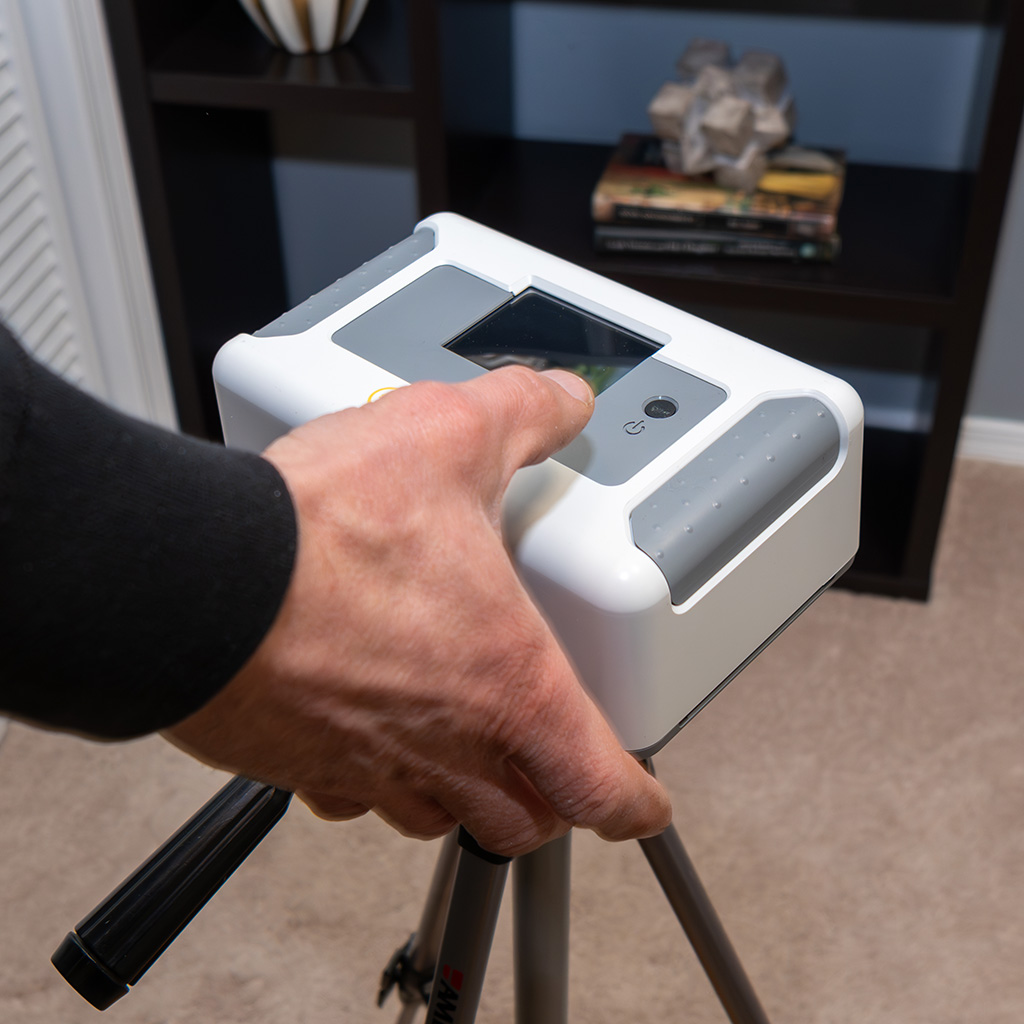
A continuous monitor goes on the lowest livable level and runs at least 48 hours under closed house conditions. It records hour by hour instead of handing back one averaged figure, and that record also shows whether the building stayed closed while the test ran. You get the result in plain language and a straight answer about what it means. Learn more about radon testing.
Radon Mitigation
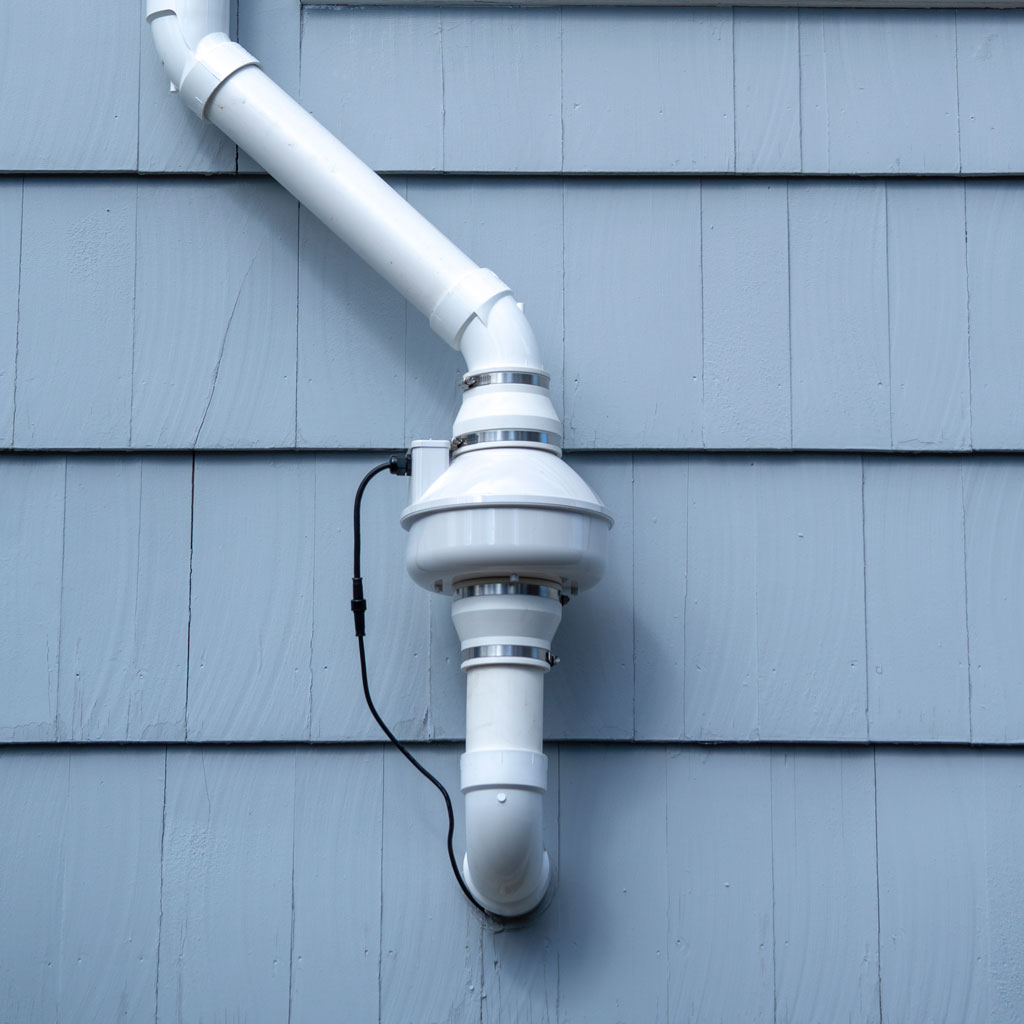
At 4 pCi/L or higher, the fix is a sub slab depressurization system. A pipe reaches into the soil under the foundation, a fan holds steady suction there, and the gas vents above the roofline instead of collecting in the basement. Most installs are finished in a day, and every one ends with a post test that proves the level came down. See how radon mitigation works.
Fan Replacement and System Repair
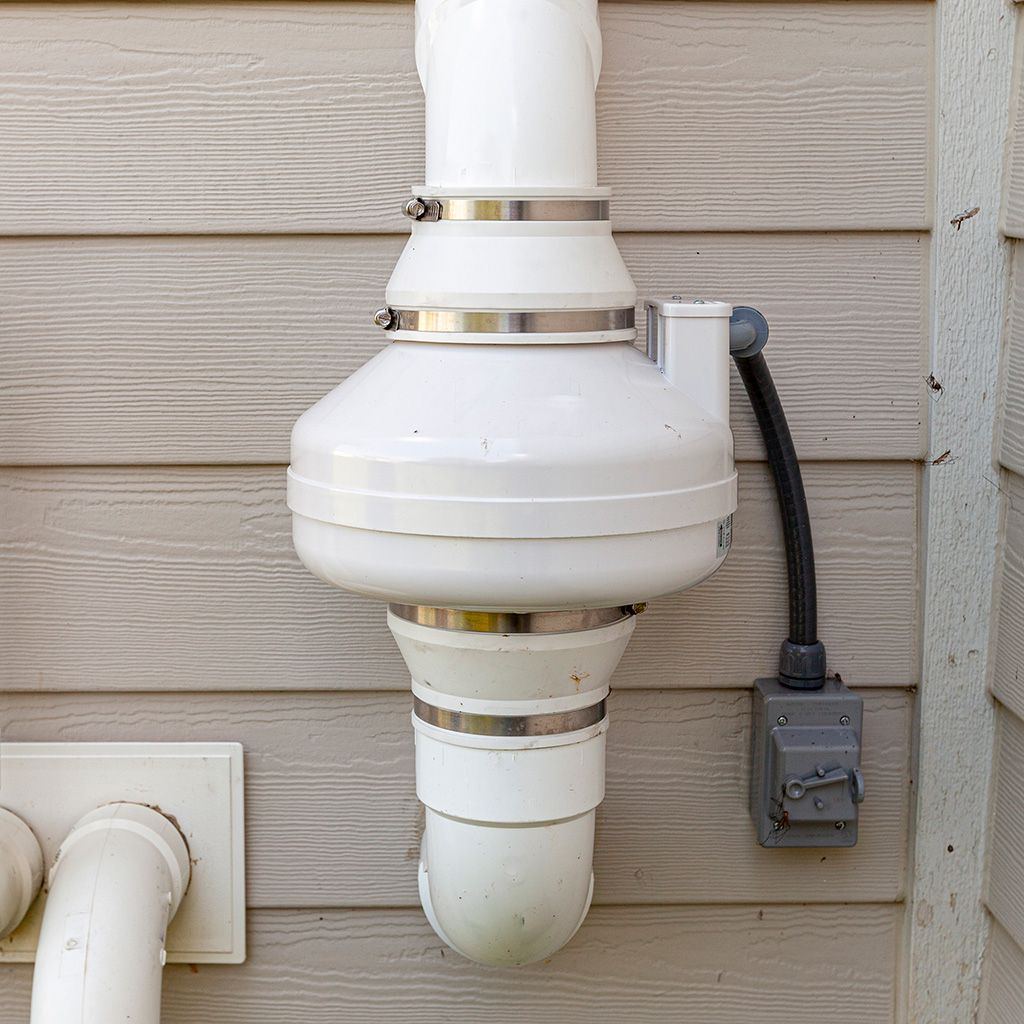
Radon fans last five to ten years, so plenty of systems in town are past due. When a fan quits, the system quits with it, silently. The manometer is the first check. If the liquid in the two legs has leveled out, nothing is being pulled. We replace fans, repair piping, and bring systems back to work.
New Construction Radon Systems
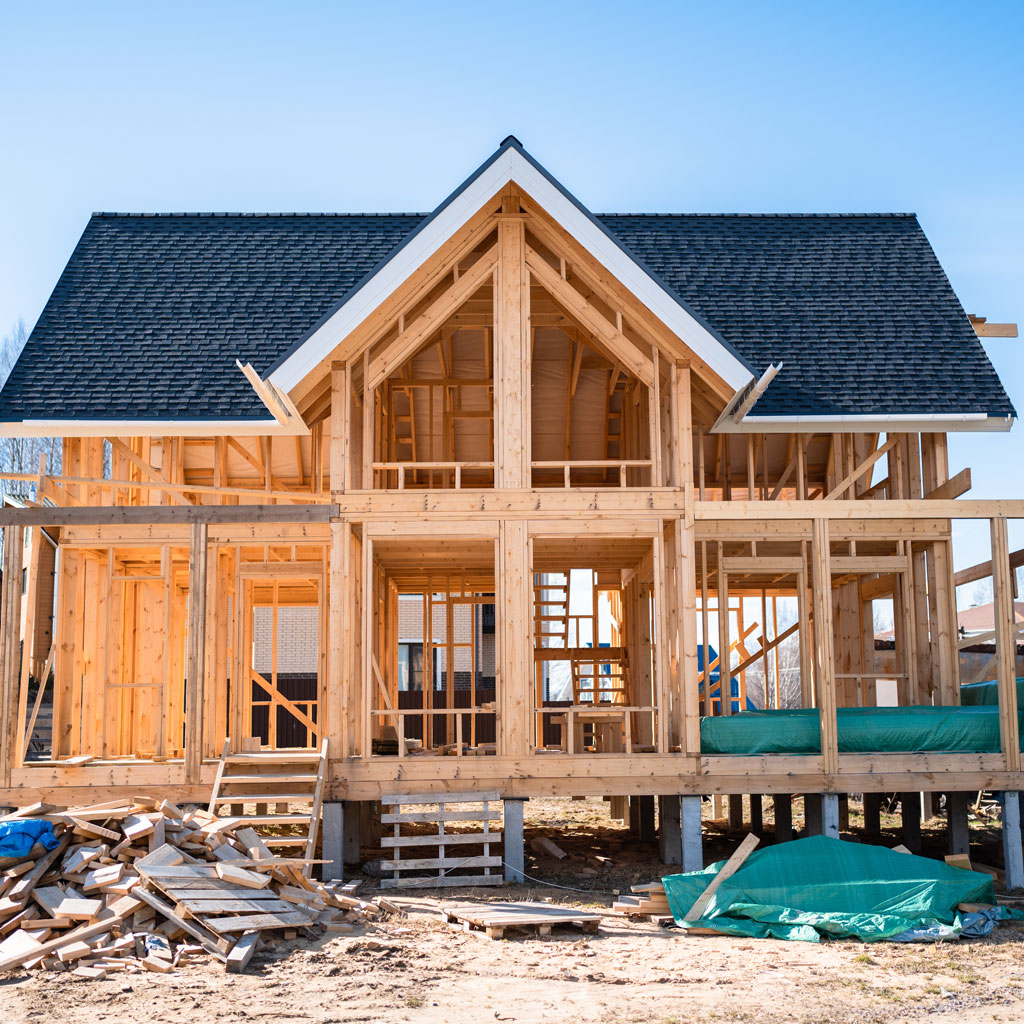
As of July 1, 2026, Iowa building code requires a passive radon system in new single and two family homes. Roughing one in while the foundation is open costs a fraction of retrofitting later. A passive stub does not always get the level low enough on its own, so test the finished house and add a fan if the number calls for one. Iowa requires radon resistant techniques in new public school construction as well.
Real Estate Radon Testing
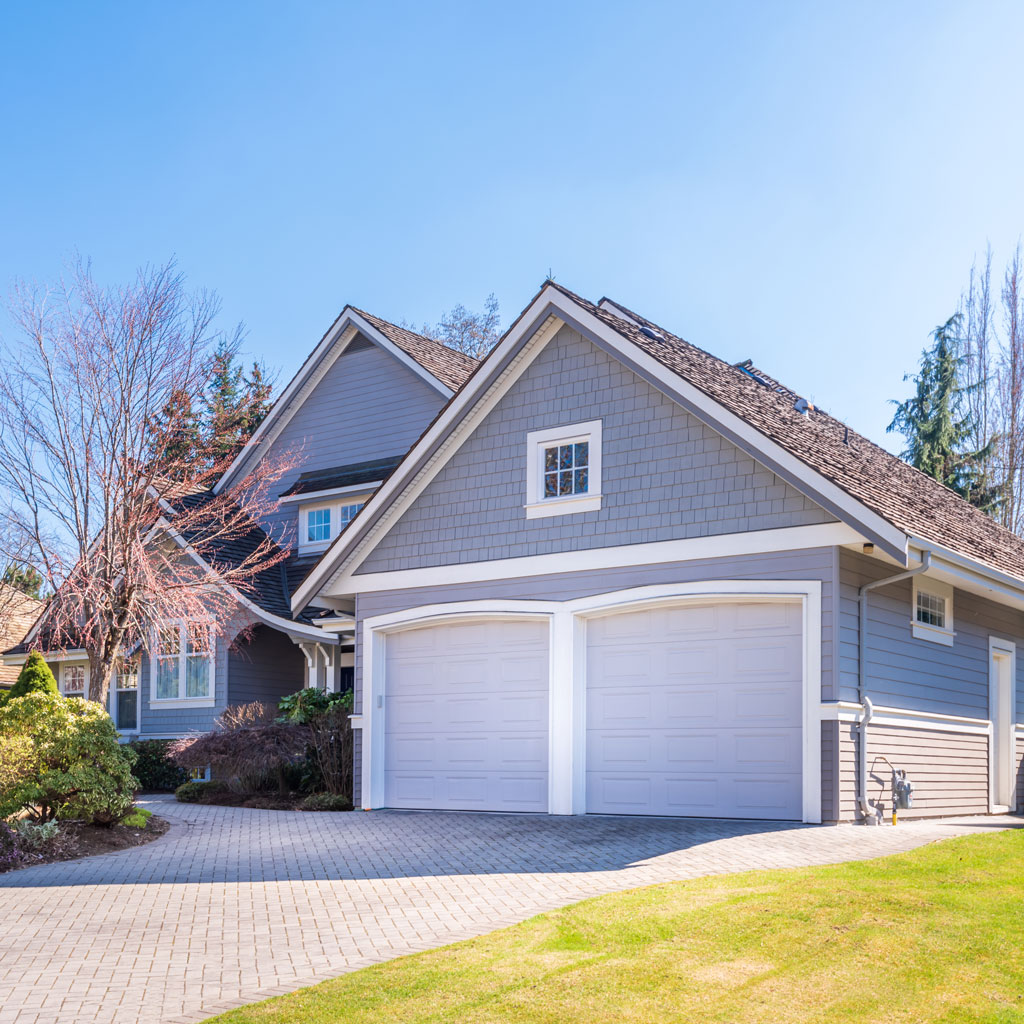
Iowa has no rule requiring a radon test during a sale, but sellers must disclose known test results, and buyers here increasingly ask for one anyway. We test with equipment and protocols that hold up on both sides of the closing table, and we schedule against the closing date, because closing dates do not move for anyone.
Test Kits and When They Are Enough
County public health departments across Iowa sell low-cost radon kits, and hardware stores carry them. If you have never tested and you want a number, buy one. We would rather you do that than keep putting it off. A cheap kit that gets used beats a professional test that never gets scheduled.
Where a kit runs out of road is anywhere the number has to hold up. It returns one averaged figure and no record of the conditions it ran in, so it cannot show whether the house was actually kept closed. That matters in three situations: a real estate transaction, where both sides need a result nobody can argue with, a follow-up after mitigation, where the point is proving the system works, and a borderline number that needs hourly detail to read. In those cases a continuous monitor is not an upsell, it is the tool the job takes.
What to Expect From a Radon Test or Install
Call or request a quote, and we sort out the building type, the test type, and the calendar. The monitor goes on the lowest livable level and we explain closed house conditions. The building stays closed for the test window, then we pull the data and send the result. If mitigation is called for, we quote it, schedule it, and close it out with a post test. On a repair, we check the fan, the manometer, the piping, and the vent line first.
Pricing and Estimates
Radon work gets priced after we see the building. The foundation, the sump pit, the fan placement, and how many suction points it takes all move the number. Call and we will talk through what to expect, but the number itself comes when we are standing in the building.
Why Estherville Property Owners Choose Midwest Radon Pros
Iowa requires anyone paid to install a radon reduction system to be credentialed through the state. Our installers are, and we show the credential without being asked. Past the credential, what matters is proof. A system that looks right and pulls nothing is worse than no system, because it feels solved. That is why every install ends with a post test.
We are not from Estherville, and there is no point pretending otherwise. We are a half hour away in Spirit Lake, which is close enough to get here on a schedule that works and far enough that you should want a reason. The reason is the credential and the verification. Midwest Radon Pros is part of Midwest Companies, so when radon work runs into a crawl space, insulation, or Guarantee Gutter question, the same local operation handles it. We do the same work south of here in Spirit Lake and Milford.
An Older Housing Stock
Estherville was named county seat when Emmet County was organized in 1859 and was incorporated in 1881, and the housing reflects it. Most of what stands here was built a long time ago and has been worked on since, which means block and poured basements of every era, additions on slabs, porches enclosed into rooms, and basements finished at some point along the way.
The useful thing to know is that remodeling changes the answer. Finishing a basement puts people on the lowest floor for hours at a stretch, and tightening a house up with new windows and insulation cuts the air exchange that used to dilute what came in. If your place has been reworked since it was last tested, the old number describes a building that no longer exists.
Common Radon Calls Around Estherville
A kit comes back at 6 pCi/L and the owner wants to know what to do next. An inspection turns up a number two weeks before closing. A basement gets finished into a bedroom and somebody thinks to ask about the air. A system from the early 2000s has a manometer that has leveled out. A new build has a capped pipe in the slab and nobody can say whether it does anything. All routine, and all of them start with a number.
Get a Radon Estimate in Estherville, IA
Need a test, a repair, a fan replacement, or a system for a new build? Call (712) 339-6868 or Schedule a Call. Tell us the date you are working against and we will build the schedule around it.
You can also visit us at: 2902 Aurora Avenue West Spirit Lake, Iowa 51360Radon Service Area Around Estherville
We serve Estherville and the surrounding area, including Armstrong, Wallingford, Graettinger, Dolliver, and rural Emmet County addresses, along with Spirit Lake and Milford to the west. If you are not sure your address is in range, call (712) 339-6868 and we will tell you in about a minute.
One note for anyone north of here. Emmet County borders Minnesota to the north, and our radon credentials are issued by the State of Iowa. They do not carry into Minnesota, which licenses radon professionals through the Minnesota Department of Health under the Minnesota Radon Licensing Act, and a contractor has to hold that license to do radon work there. We work the Iowa side.
Frequently Asked Questions.
Questions Estherville Homeowners Ask About Radon
Is a county health department or hardware store kit good enough?
For a first look, yes, and we would rather you use one than test nothing. A kit tells you roughly where you stand. What it cannot do is document the conditions it ran in, which is why a kit result generally will not carry a real estate transaction, verify a mitigation system, or settle a borderline number. Use the kit to find out whether you have a question. Use a professional test when the answer has to hold up.
My result came back between 2 and 4 pCi/L. Do I do anything?
It is a judgment call, and you are entitled to the information behind it. The EPA sets the action level at 4 pCi/L and says homes between 2 and 4 are worth considering, because there is no level at which radon becomes harmless. What settles it is usually who is down there and for how long. A storage basement nobody enters is a different case than a bedroom. Retest first, ideally in heating season, then decide with a second number in hand.
Does it matter whether I am down by the river or up on the hill?
It matters enough that you cannot borrow somebody else’s result. Estherville has more than a hundred feet of relief between the river valley and the ground above it, and the material changes with it, from valley fill and terrace deposits near the water to dense till up top. Those move soil gas differently. It does not make one part of town safe and another dangerous. It makes your own address the only number worth acting on.
You are based in Spirit Lake. Why call you instead of someone closer?
Because the credential and the verification are what you are actually buying. Iowa requires state credentialing to install a radon reduction system, and a system that looks finished and pulls nothing is worse than none at all. Ask anybody you call, us included, for the credential and for a post installation test in writing. If somebody closer gives you both, hire them. If they do not, the half hour is worth it.
Can you work around a closing date?
Yes. Give us the date on the first call. A 48 hour test plus results, and if mitigation is needed a one day install with a verification test 24 hours after the fan starts, fits inside most inspection periods when it is scheduled early rather than in the last week.
I already have a system. How do I know it is still working?
Look at the manometer on the pipe, the small gauge with colored liquid in a U shape. If the two sides have leveled out, the fan has quit. Even when it shows suction, the only proof of the actual radon level is a test, which is why the EPA recommends retesting every two years, mitigated homes included.