

Radon Testing and Mitigation in Sac City, IA
Midwest Radon Pros is part of Midwest Companies. Our shop is in Spirit Lake, about eighty miles north of Sac City, and we are straightforward about that below. Radon gives no warning. You cannot see it or smell it, and the only way to know what a building is doing with it is to put a meter on it. Every county in Iowa sits in the EPA’s highest risk zone, Sac County included.
We handle State of Iowa credentialed radon testing, mitigation installs, fan replacements, repairs, new construction systems, and real estate testing for homes and buildings in Sac City. Every mitigation job ends with a post test, so the work comes with a number instead of a handshake.
Midwest Radon Pros.
The Glacier Put the River There
The North Raccoon runs through the middle of Sac City, and it is there because of ice.
The Iowa Geological Survey describes the Des Moines Lobe surging down into Iowa, halting at what is now the city of Des Moines, and in the process establishing the present course of the Raccoon River. The survey also outlines the western edge of that lobe using a line of towns that runs through Storm Lake and Carroll. Sac City sits between them, near the margin, on ground the last glacier delivered.
What the river has done since is cut down into that drift. Along the major streams on the lobe, the Raccoon included, the channel has in places worked all the way through the glacial sequence. So Sac City has houses sitting on the upland drift and houses sitting closer to the valley, and those are not always the same material at foundation depth.
For radon the mechanism is the same either way. Glacial drift is pulverized rock, trace uranium in it decays into radium, radium decays into radon, and the gas moves up through the soil until a heated building acts like a low grade vacuum and pulls it in through slab cracks, sump pits, floor drains, and gaps around plumbing. Iowa HHS puts the average indoor radon level in Iowa at 8.5 pCi/L against a national average of 1.3, and the Iowa Radon Survey found 71.6 percent of Iowa homes above the EPA action level of 4 pCi/L, the highest share of any state.
Living With a Radon System
The objection we hear more than any other is not about the cost or the science. It is some version of “I do not want a pipe on my house.” That is a fair thing to care about in a town this size, where people notice, so here is what one is actually like to own.
Noise. The fan sits outside or in an unconditioned space, never in your living area, and it makes a low steady hum you stop hearing within a week. Most people notice it more when it quits than when it runs. If a system is loud enough to bother you, something is wrong with it, usually the mounting or a fan sized badly for the house.
Electricity. A radon fan runs all the time, which sounds expensive and is not. Typical fans draw somewhere in the range of a couple of light bulbs. It is a real line on the power bill and a small one.
Maintenance. Essentially none, which is the problem. There is no filter to change and nothing to service, so the system sits there working until one day it does not. Look at the manometer on the pipe twice a year, the small gauge with liquid in a U shape. If the two legs have leveled out, the fan has quit. That is the whole maintenance routine.
Appearance. This is a design question and it has real answers. The pipe can often run inside through a closet or a chase and out the roof, which costs somewhat more and looks like nothing. Where it runs outside, it can be placed on a side or back elevation, sized sensibly, and painted to match. Where it discharges is dictated by the standard, but which wall it climbs usually is not. Ask about this before you sign anything, because it is much harder to move later.
Resale. A working system with documentation is an asset in Iowa, not a liability. Buyers here ask about radon, and a seller who can hand over a post installation test has answered the question before it gets asked. The house that has a problem at closing is the one with no system and no number.
Our Radon Services.
Radon Services in Sac City, IA
The calls come in a few shapes. A building has never been tested. A result came back high. A fan that ran for years has gone quiet. A closing is coming and radon is part of the deal.
Radon Testing
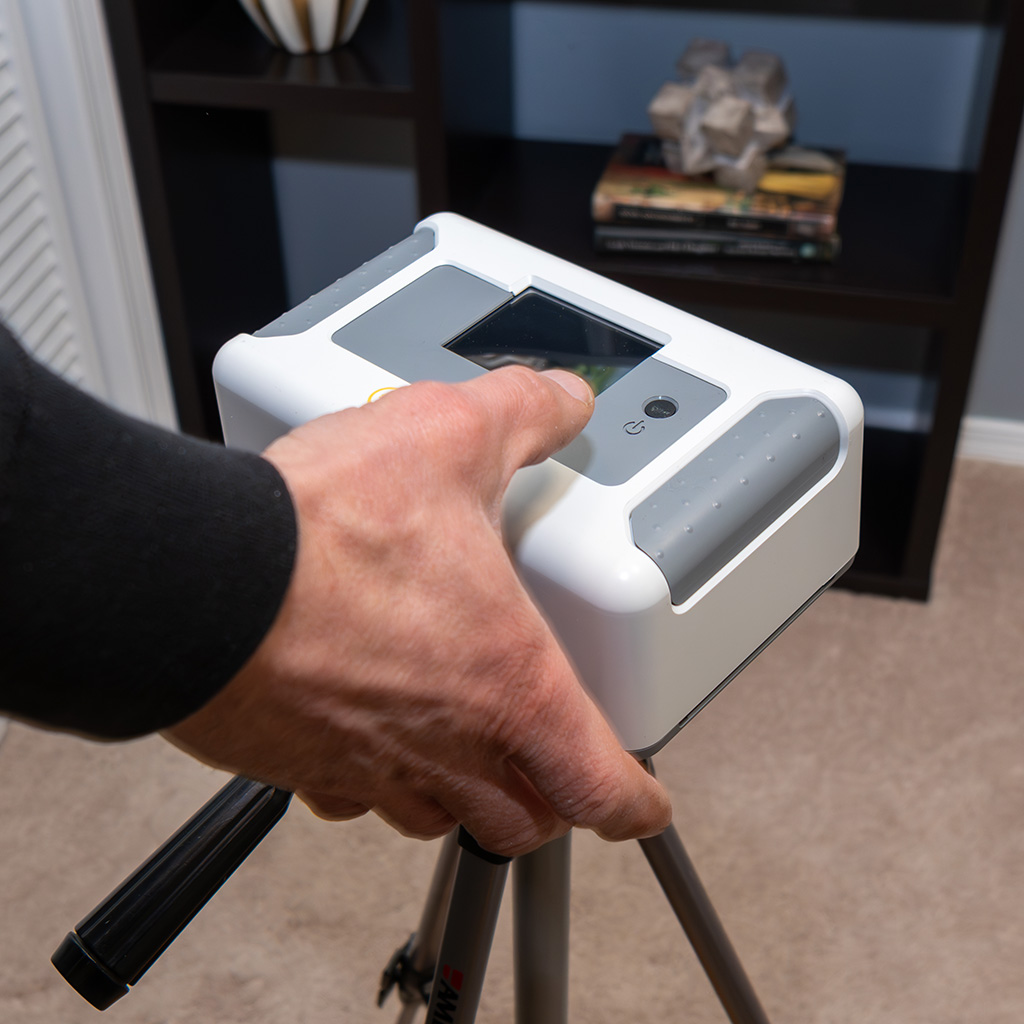
A continuous monitor goes on the lowest livable level and runs at least 48 hours under closed house conditions. It records hour by hour instead of handing back one averaged figure, and that record also shows whether the building stayed closed while the test ran. You get the result in plain language and a straight answer about what it means. Learn more about radon testing.
Radon Mitigation
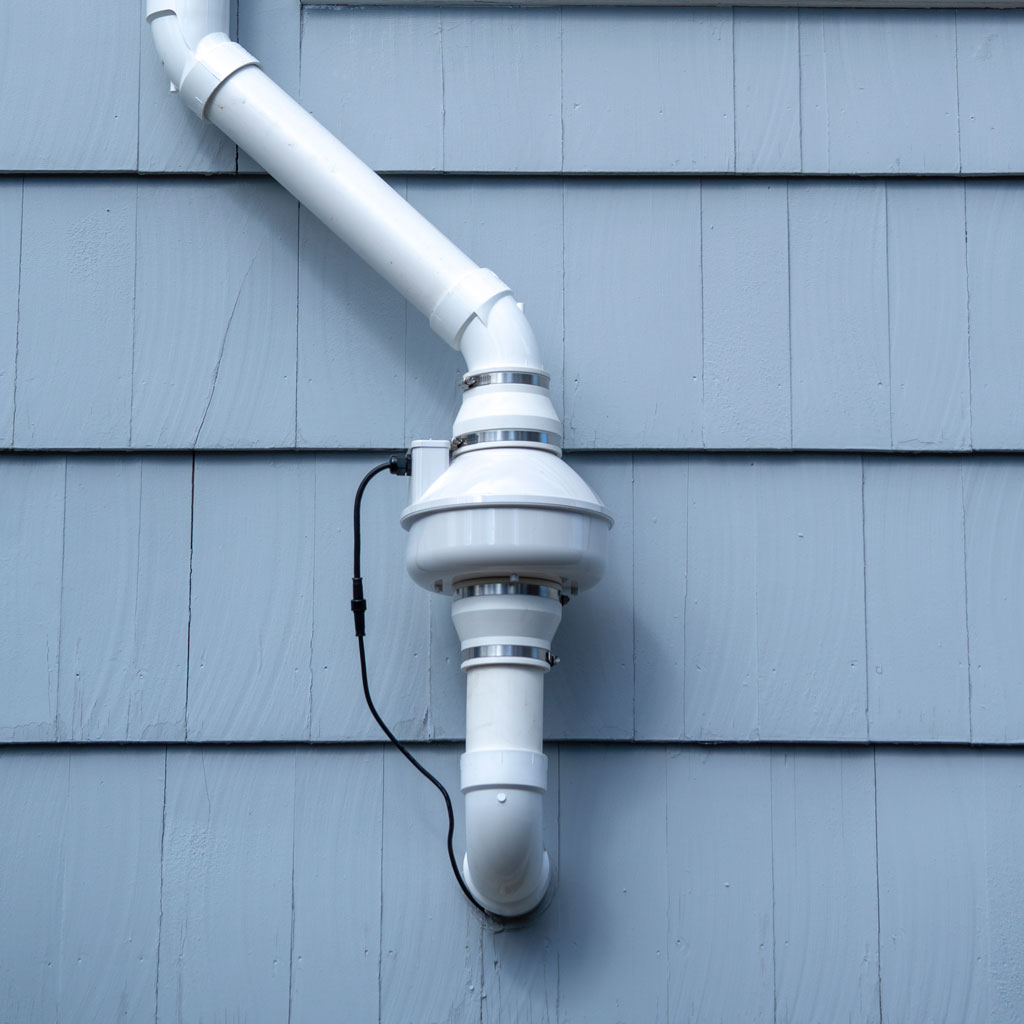
At 4 pCi/L or higher, the fix is a sub slab depressurization system. A pipe reaches into the soil under the foundation, a fan holds steady suction there, and the gas vents above the roofline instead of collecting in the basement. Most installs are finished in a day, and every one ends with a post test that proves the level came down. See how radon mitigation works.
Fan Replacement and System Repair
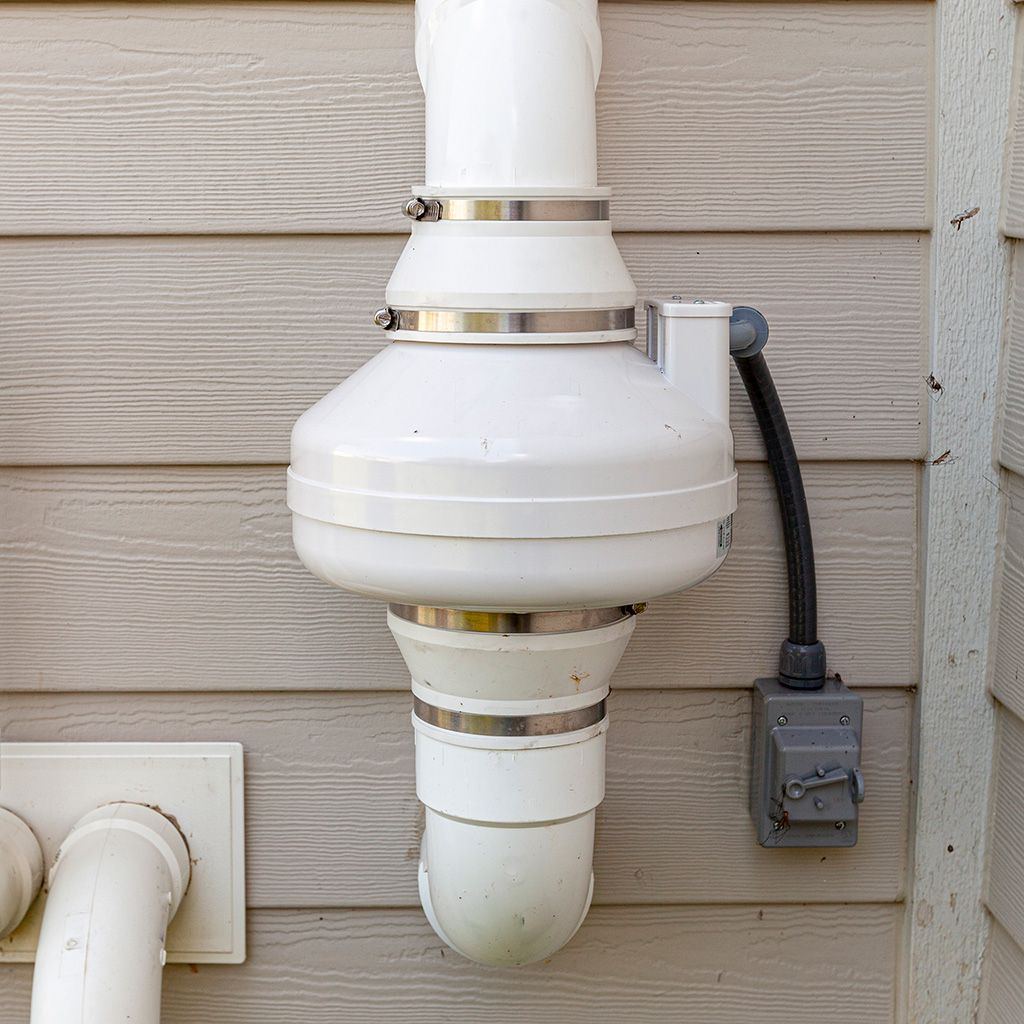
Radon fans last five to ten years, so an older system may be due or past due. When a fan quits, the system quits with it, silently. Given the drive down, we would much rather replace a fan on an existing system than sell you a new one, and a quiet system is worth checking before you assume it is fine.
New Construction Radon Systems
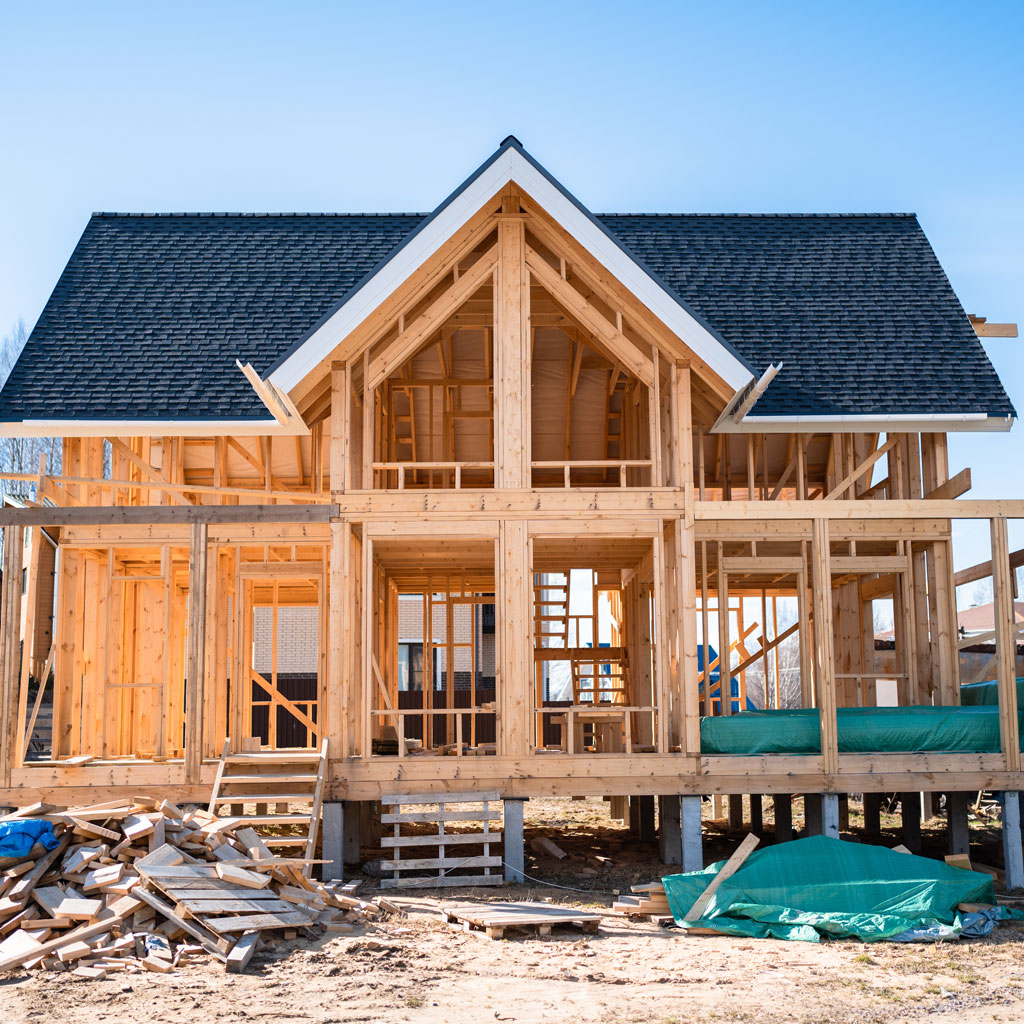
As of July 1, 2026, Iowa building code requires a passive radon system in new single and two family homes. Roughing one in while the foundation is open costs a fraction of retrofitting it later, and it settles the routing question before the walls close. A passive system lowers radon but does not guarantee a level, so test the finished house and add a fan if the number calls for one.
Real Estate Radon Testing
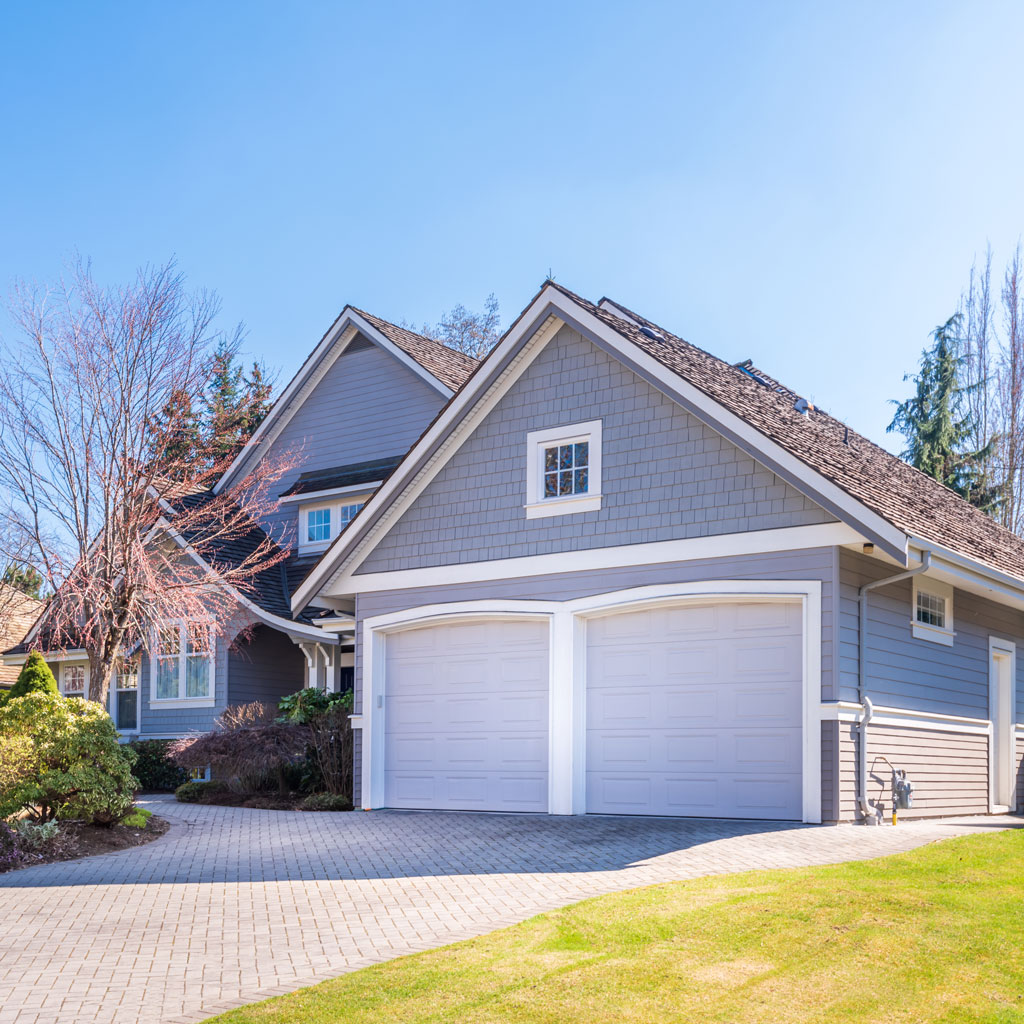
Iowa has no rule requiring a radon test during a sale, but sellers must disclose known test results, and buyers increasingly ask for a test anyway. We test with equipment and protocols that hold up on both sides of the closing table. Tell us the closing date on the first call.
How the Schedule Works From Here
Sac City is a long way from Spirit Lake and there is no getting around that. What makes it workable is that Sac City is close to Storm Lake, and we run work down that way in batches rather than one address at a time. In practice that means your job most likely gets scheduled alongside other work in the same corner of the state, on a specific day rather than whenever.
Two things follow. Call earlier than you would a contractor in town, especially with a closing date involved. And if you have more than one building, or a neighbor who has been meaning to test, say so, because several buildings on one trip is a better use of the drive and it costs less per building.
What to Expect From a Radon Test or Install
Call or request a quote, and we sort out the building, the test, and the calendar. The monitor goes on the lowest livable level and we explain what keeping the building closed means. You keep it closed for the test window. We come back for the monitor, pull the data, and send the result. If mitigation is needed, we quote it, schedule it, and finish with a post test.
Pricing and Estimates
Radon work gets priced after we see the building. The foundation, the sump pit, the fan placement, and how many suction points it takes all move the number, and so does whether you want the pipe run inside or outside. Call and we will talk through what to expect, but the number itself comes when we are standing in the building.
Why Sac City Property Owners Choose Midwest Radon Pros
Iowa requires anyone paid to install a radon reduction system to be credentialed through the state. Our installers are, and we show the credential without being asked. Ask us for it, and ask anybody else you call for it too, especially anybody closer.
Past the credential, what matters is proof. A system can look finished and pull nothing, and that is worse than no system at all, because it feels solved. That is why every install ends with a post test. Midwest Radon Pros is part of Midwest Companies, so when radon work runs into a crawl space, insulation, or Guarantee Gutter question, the same operation handles it. We do the same work in Storm Lake and Cherokee.
An Older Housing Stock
Sac City has been here since the 1850s and the railroad arrived in 1879, and a lot of what stands here was built long before anybody thought about soil gas. That means block, poured, and stone basements of every era, additions on slabs, porches closed in as rooms, and basements finished at some point along the way.
The useful thing to know is that remodeling changes the answer. Finishing a basement puts people on the lowest floor for hours at a stretch. Tightening a house up with new windows and insulation cuts the air exchange that used to dilute whatever came in. If your place has been reworked since it was last tested, the old number describes a building that no longer exists.
Common Radon Calls Around Sac City
Somebody wants a system but does not want a pipe down the front of the house. A basement gets finished into a bedroom and somebody thinks to ask about the air. An inspection comes back high three weeks before closing. A system from years back has a manometer nobody has looked at. A seller wants documentation to hand a buyer. All routine.
Get a Radon Estimate in Sac City, IA
Need a test, a repair, a fan replacement, or a system for a new build? Call (712) 339-6868 or Schedule a Call. Tell us your timeline on the first call and we will tell you honestly whether we can meet it.
2902 Aurora Avenue West
Spirit Lake, Iowa 51360
Radon Service Area Around Sac City
We serve Sac City and the surrounding area, including Odebolt, Schaller, Wall Lake, Lake View, Early, Auburn, and rural Sac County addresses, along with Storm Lake and Cherokee. If you are not sure whether your address is in range, call (712) 339-6868 and we will tell you straight.
Frequently Asked Questions.
Questions Sac City Homeowners Ask About Radon
Will I hear the fan running?
Barely, and not from your living space. The fan goes outside or in an unconditioned area like an attic or a garage, never inside the house, and it produces a low steady hum. Most people stop noticing it within a week and then only notice when it stops. A system loud enough to annoy you has something wrong with it, usually the mounting or a fan that is the wrong size for the house, and both are fixable.
What does it cost to run?
Less than people expect. A radon fan runs continuously, which is what makes people nervous, but a typical one draws about what a couple of light bulbs do. It shows up on the power bill as a small steady line rather than something you would notice month to month.
Does having a radon system hurt my home's value?
The opposite, in Iowa. Buyers here know about radon and a lot of them ask, so a seller who can produce a working system and a post installation test has settled the question in advance. The house that runs into trouble at closing is the one with no system and no test, where the buyer’s inspection turns up a number with ten days left. A system says the problem was found and handled.
Why does the river matter for any of this?
Only as a way of understanding what is under you. The Iowa Geological Survey says the Des Moines Lobe established the present course of the Raccoon, which means the ice that set that river down also left the drift your basement sits in. Since then the river has cut into that drift, so a house near the valley is not necessarily on the same material as one up on the flat. None of that predicts your radon level. It just explains why it is here at all.
Can you work around a closing date?
Usually, if you call early. A 48 hour test plus results, and if mitigation is needed a one day install with a verification test 24 hours after the fan starts, fits inside most inspection periods. At this distance our schedule is the limiting factor rather than the work, so put the date in the first call.
I already have a system. How do I know it is still working?
Look at the manometer on the pipe, the small gauge with colored liquid in a U shape. If the two sides have leveled out, the fan has quit. Even when it shows suction, only a test proves the radon level actually came down, which is why the EPA recommends retesting every two years, mitigated homes included.