

Radon Testing and Mitigation in Lake Park, IA
Midwest Radon Pros is part of Midwest Companies, and our shop is on Aurora Avenue West in Spirit Lake, about twenty minutes to a half hour east of Lake Park. Radon gives no warning. You cannot see it or smell it, and the only way to know what a building is doing with it is to put a meter on it. Every county in Iowa sits in the EPA’s highest risk zone, and Dickinson County is no exception out here on the west side.
We handle State of Iowa credentialed radon testing, mitigation installs, fan replacements, repairs, new construction systems, and real estate testing for houses, acreages, and farmsteads around Lake Park. Every mitigation job ends with a post test, so the work comes with a number instead of a handshake.
Midwest Radon Pros.
Radon Around Lake Park
Lake Park sits on higher ground west of the Iowa Great Lakes, wrapped around the 1,041 acres of Silver Lake, with Trapper’s Bay State Park just outside town and public ground in most directions. The land looks different out here than it does at Okoboji. The ground underneath it does not. This is the same Des Moines Lobe drift, rock the last glacier ground to powder. Trace uranium in it decays into radium, radium decays into radon, and the gas works up through the soil until a heated building gives it a way in.
Iowa HHS lists the average indoor radon level in Iowa at 8.5 pCi/L against a national average of 1.3, and the Iowa Radon Survey put 71.6 percent of Iowa homes above the EPA action level of 4 pCi/L, the highest share in the country. Compiled test data for Dickinson County puts the county average at 8.3 pCi/L. Those are averages, and averages do not describe your house. A test does.
Our Radon Services.
Radon Services in Lake Park, IA
The calls come in a few shapes. A place has never been tested. A result came back high. A fan that ran for years has gone quiet. A closing is coming and radon is part of the deal.
Radon Testing
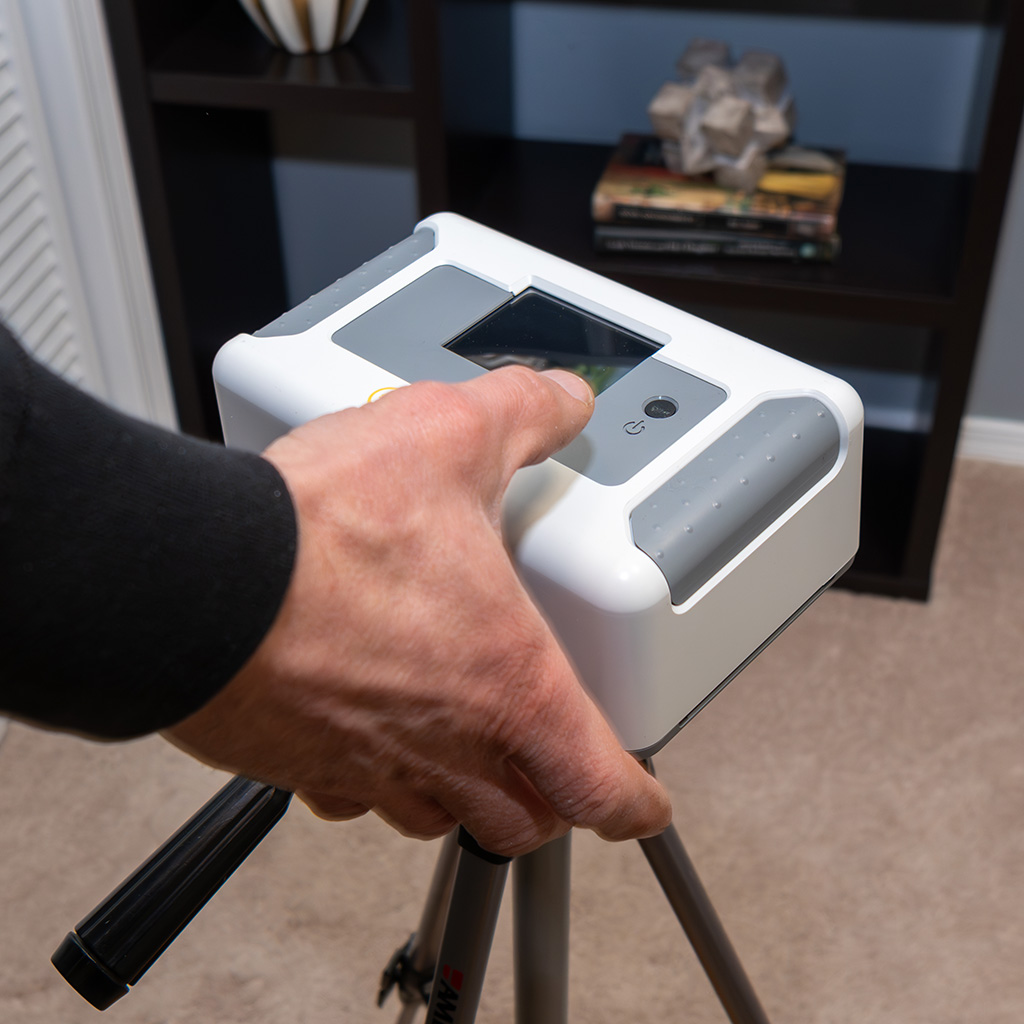
A continuous monitor goes on the lowest livable level and runs at least 48 hours under closed house conditions. It records hour by hour instead of handing back one averaged figure, and that record also shows whether the building stayed closed while the test ran. You get the result in plain language and a straight answer about what it means. Learn more about radon testing.
Radon Mitigation
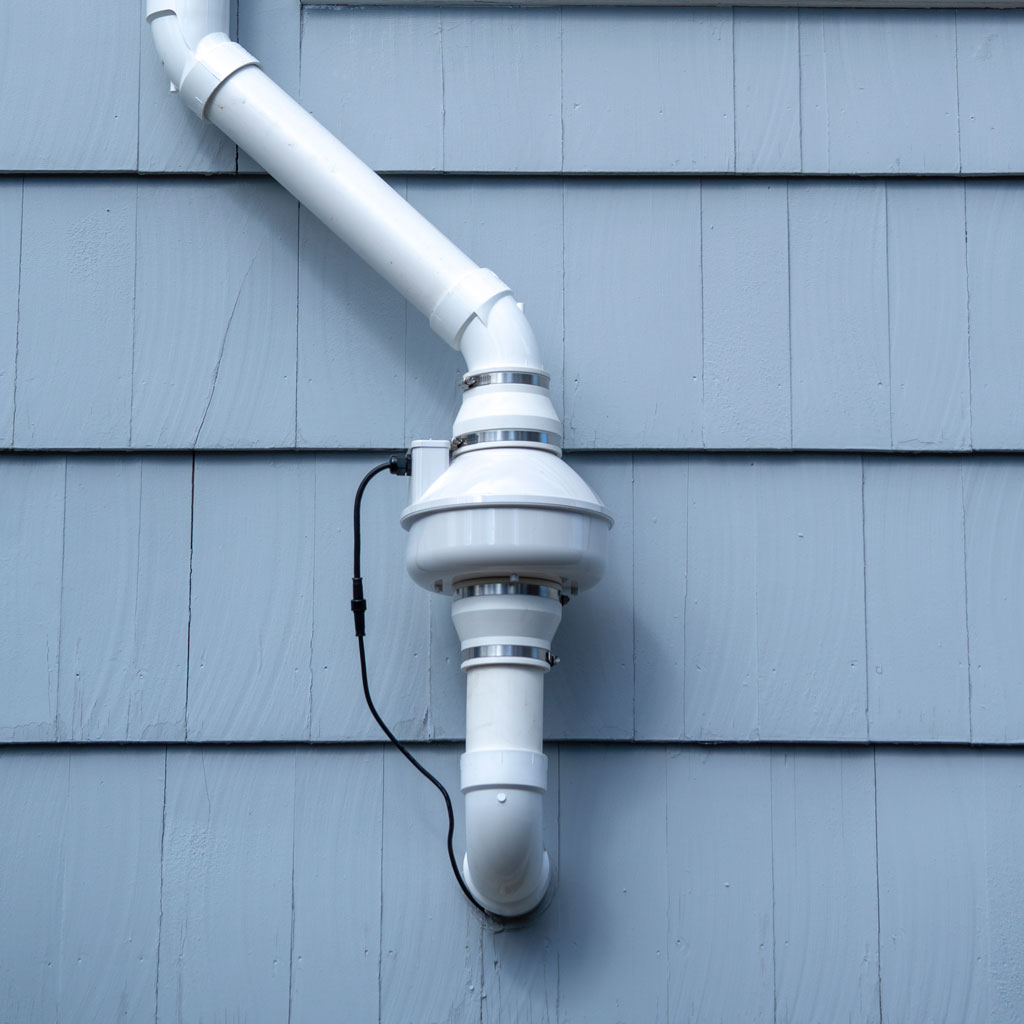
At 4 pCi/L or higher, the fix is a sub slab depressurization system. A pipe reaches into the soil under the foundation, a fan holds steady suction there, and the gas vents above the roofline instead of collecting in the basement. Most installs are finished in a day, and every one ends with a post test that proves the level came down. See how radon mitigation works.
Fan Replacement and System Repair
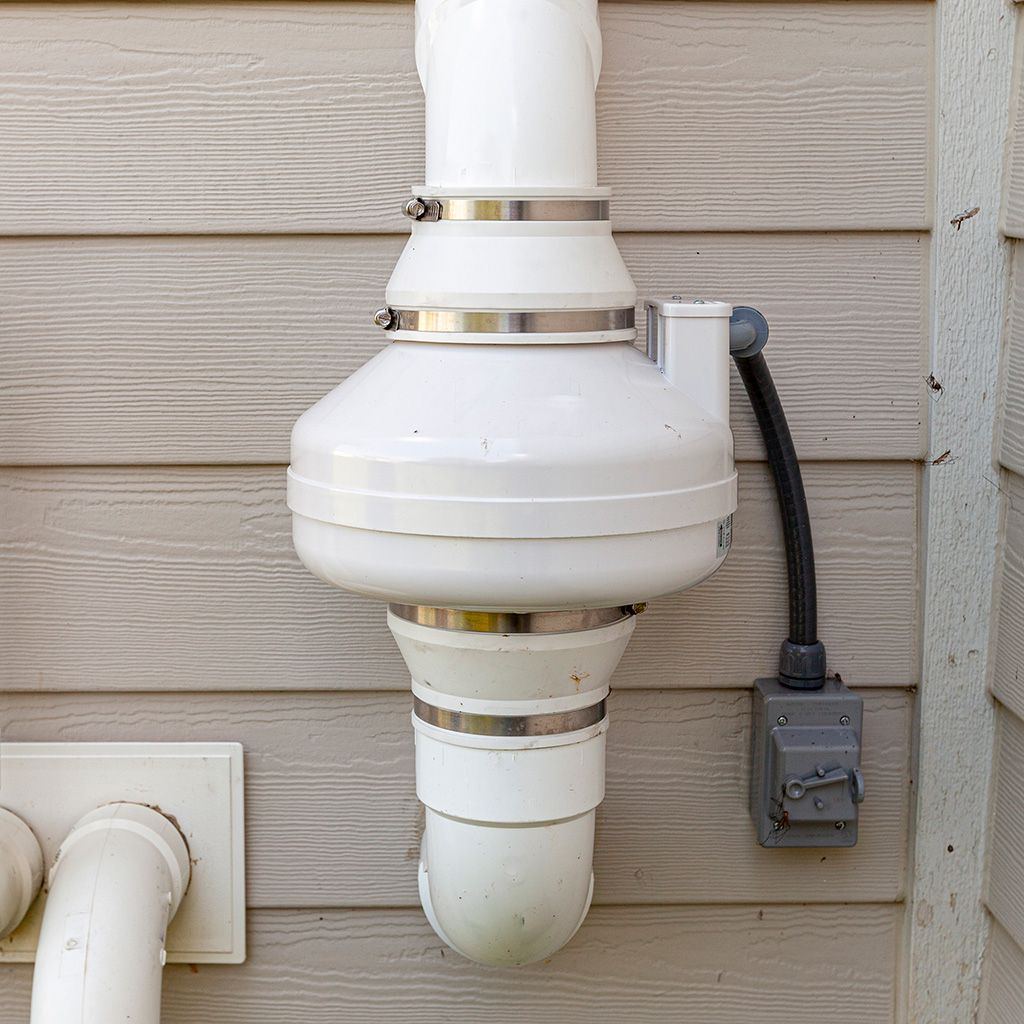
Radon fans last five to ten years. When one quits, the system quits with it, silently. The manometer is the first check. If the liquid in the two legs has leveled out, nothing is being pulled. We replace fans, repair piping, and bring existing systems back to work, and we would rather do that than sell you a system you already have.

New Construction Radon Systems
As of July 1, 2026, Iowa building code requires a passive radon system in new single and two family homes. Roughing one in while the foundation is open costs a fraction of retrofitting it later, and on a rural build it saves a second trip out. A passive stub does not always get the level low enough on its own, so test the finished house and add a fan if the number calls for one.
Real Estate Radon Testing
Iowa sellers must disclose known radon test results. Acreages and lake places around here often sell to buyers from out of the area who are working on a tight inspection window. We test with equipment and protocols that hold up on both sides of the closing table, and we schedule against the closing date, because closing dates do not move for anyone.
What to Expect From a Radon Test or Install
Call or request a quote, and we sort out the building type, the test type, and the calendar. The monitor goes on the lowest livable level and we explain what closed house conditions mean. The building stays closed for the test window, then we pull the data and send the result. If mitigation is called for, we quote it, schedule it, and close it out with a post test. On a repair, we check the fan, the manometer, the piping, and the vent line first.
Pricing and Estimates
Radon work gets priced after we see the building. The foundation, the sump pit, the fan placement, and how many suction points it takes all move the number, and on an older farmhouse the foundation is usually what decides it. Call and we will talk through what to expect, but the number itself comes when we are standing in the building.
Why Lake Park Property Owners Choose Midwest Radon Pros
Iowa requires anyone paid to install a radon reduction system to be credentialed through the state. Our installers are, and we show the credential without being asked. Past the credential, what matters is proof. A system that looks right and pulls nothing is worse than no system, because it feels solved. That is why every install ends with a post test.
We are not five minutes away out here the way we are at the lakes, and we will not pretend otherwise. What we will do is tell you honestly when we can be there and then be there. Midwest Radon Pros is part of Midwest Companies, so when radon work runs into a crawl space, insulation, or Guarantee Gutter question, the same local operation handles it. We do the same work east of here in Spirit Lake and Milford.
Acreages, Farmsteads, and Older Foundations
A good share of the work around Lake Park is not in town. It is on acreages and farmsteads, in houses built long before anybody thought about soil gas, and those buildings bring their own problems. Stone and block foundations have mortar joints that have been opening up for a century. Cellars and crawl spaces with bare dirt floors are not a barrier at all, they are an open surface. Additions get built on slabs against a house with a basement, so one roof covers two or three kinds of ground contact.
None of that makes a house unfixable. It changes the design. A dirt floor gets a sealed membrane with suction drawn beneath it rather than a pipe cored through a slab that does not exist. Mixed foundations sometimes need more than one suction point. It is more involved than a straightforward basement install, and it is why we want to see an older place before quoting it.
Well Water and Radon
People on private wells ask about this, and the honest answer is that it is usually not the problem. Radon does dissolve into groundwater, and it comes back out of the water when you shower or run the dishwasher. But the transfer is not efficient. As a rule of thumb, it takes somewhere around 10,000 pCi/L of radon in water to add about 1 pCi/L to the air in a house. The EPA’s own position is that soil gas contributes far more indoor radon than drinking water does, and the wells with genuinely high numbers are mostly in granite and fractured bedrock country, which this is not.
So test the air first. That is where the risk is and that is what a mitigation system addresses. Water testing earns its place in one situation: a house on a private well where the air still reads high after a verified system is running and something has to account for the difference. If you are in that spot, say so and we will help you sort out what is left.
Common Radon Calls Around Lake Park
An acreage goes on the market and the buyer’s inspection turns up a number nobody expected. A farmhouse cellar has a dirt floor and the owner assumes nothing can be done. A system from the early 2000s has a manometer that has leveled out. A new build has a capped pipe in the slab and nobody can say whether it is doing anything. Somebody on the Minnesota side of the line calls because we came up first. All routine, and all of them start with a number.
Get a Radon Estimate in Lake Park, IA
Need a test, a repair, a fan replacement, or a system for a new build? Call (712) 339-6868 or Schedule a Call. If you are out on an acreage, tell us when you call and we will plan the trip around it.
You can also visit us at:
2902 Aurora Avenue West
Spirit Lake, Iowa 51360
Radon Service Area Around Lake Park
We serve Lake Park and the surrounding area, including Spirit Lake, Okoboji, Milford, and the rural addresses across western Dickinson County. If you are not sure your address is in range, call (712) 339-6868 and we will tell you in about a minute.
The Minnesota line is a short distance to the north, so this comes up often: our radon credentials are issued by the State of Iowa and they do not carry across the border. Minnesota runs its own licensing through the Minnesota Department of Health under the Minnesota Radon Licensing Act, and a contractor has to hold that license to do radon work there. We work the Iowa side. If you are calling from north of the line, say so on the first call and we will point you toward the right place instead of wasting your time.
Frequently Asked Questions.
Questions Lake Park Owners Ask About Radon
We are on a private well. Should we test the water too?
Test the air first. Roughly 10,000 pCi/L of radon in water adds about 1 pCi/L to indoor air, so water is a weak pathway compared with soil gas, and the wells that test genuinely high are mostly in granite and fractured bedrock regions rather than glacial drift like ours. Water testing makes sense if your air reads high after a verified mitigation system is running and the numbers still do not add up. Short of that, the air test is the one that matters.
Our farmhouse has a dirt floor cellar. Can that even be mitigated?
It can, and we do it regularly. A bare dirt floor is a wide open path for soil gas, which sounds worse than it is, because it also gives a system something straightforward to work with. The usual approach is a sealed membrane laid over the soil with suction drawn from underneath it. Stone and block walls with open mortar joints get addressed as part of the same job. Old houses are more work to design around, not harder to fix.
I live in Minnesota, just over the line. Can you help?
Not with the work itself. Our credentials come from the State of Iowa and they stop at the border. Minnesota licenses radon professionals through the Minnesota Department of Health under the Minnesota Radon Licensing Act, and a contractor needs that license to test or mitigate up there. Call us anyway if you are unsure and we will get you pointed in the right direction.
Does an older house test higher than a newer one?
Not reliably, and people are often surprised by that. Age tells you about the foundation, not about the result. A drafty old farmhouse exchanges a lot of air, which dilutes what comes in. A tight new house holds onto it. We have tested century-old places that came back low and five-year-old houses that came back well over the action level. The only thing that settles it is a measurement.
Can you work around a closing date?
Yes. Give us the date on the first call, and give it to us early if the property is rural, because the drive is part of the schedule. A 48 hour test plus results, and if mitigation is needed a one day install with a verification test 24 hours after the fan starts, fits inside most inspection periods when it is booked in time. Rural addresses around Lake Park are worth booking a few days sooner than a place in town.
I already have a system. How do I know it is still working?
Look at the manometer on the pipe, the small gauge with colored liquid in a U shape. If the two sides have leveled out, the fan has quit. Even when it shows suction, the only proof of the actual radon level is a test, which is why the EPA recommends retesting every two years, mitigated homes included.